


Thermal break strips are an important component of modern aluminum window and door systems. Although they may look like simple plastic profiles, their dimensions, geometry, material composition, and manufacturing quality can directly influence the thermal performance and long-term reliability of an aluminum profile system.
For architects, window manufacturers, system designers, and building material distributors, knowing the common types of thermal break strips and understanding how to evaluate their quality is essential before placing an order.
So, what shapes are available, and what should buyers look for when comparing different products?
What Are Thermal Break Strips?
A thermal break strip, also called a thermal barrier strip or polyamide strip, is installed between aluminum profile sections to reduce direct heat transfer through the metal frame.
Aluminum has high thermal conductivity. Without an effective thermal separation, heat can travel relatively easily from one side of an aluminum frame to the other, creating a thermal bridge.
A properly designed thermal break strip for aluminum windows interrupts this conductive path. PA66, particularly glass-fiber-reinforced PA66, is widely used because it can provide a useful combination of mechanical strength, dimensional stability, and thermal performance.
However, not every thermal break strip has the same geometry or quality.
What Types of Thermal Break Strip Shapes Are Available?
There is no single universal shape for every aluminum profile. The geometry of a thermal break strip is generally designed according to the profile structure, assembly method, required mechanical performance, and intended application.
Common designs include straight or flat strips, multi-chamber profiles, and more specialized interlocking or customized shapes.
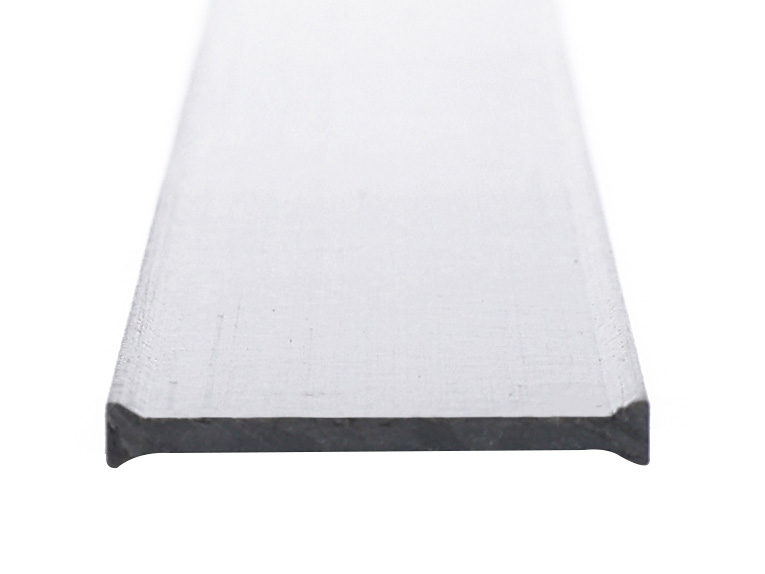


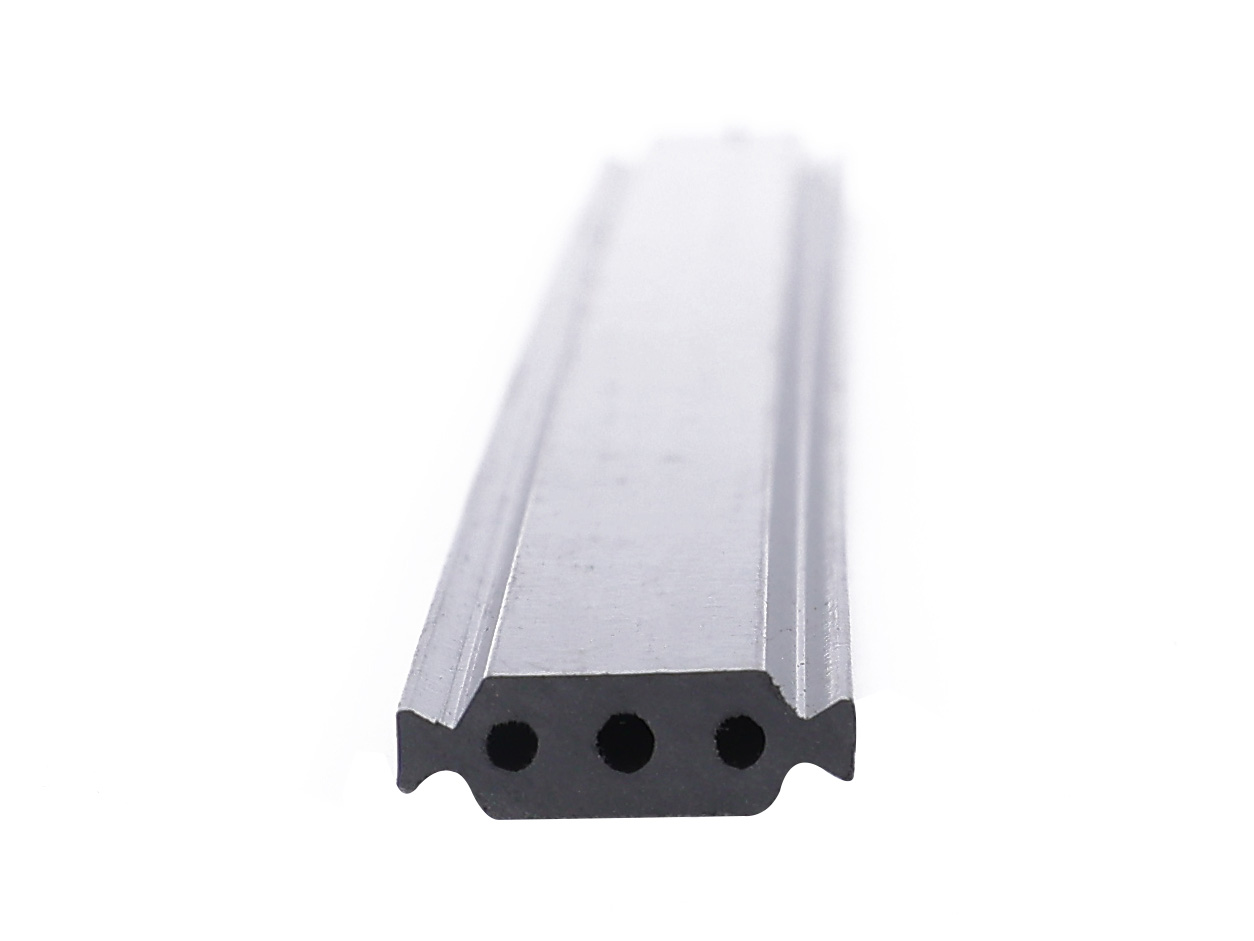
Therefore, the "best" shape is not necessarily the most complicated one. The correct geometry is the one that matches the aluminum profile and satisfies the system's mechanical and thermal requirements.
How Does Thermal Break Strip Shape Affect Performance?
The shape of a thermal barrier strip does more than determine how it fits into an aluminum profile.
Its cross-sectional geometry can influence the contact area with aluminum, mechanical interlocking, dimensional stability, and the way heat travels through the overall frame assembly.
For this reason, designers should evaluate the thermal break strip together with the aluminum profile rather than treating the strip as an independent component.
The thermal break strip width is also important. A wider thermal separation can increase the distance through which heat must travel across the insulating section, but the actual thermal performance depends on the entire window or door system, including profile geometry, glazing, seals, and installation.
This is why experienced manufacturers normally select the strip according to engineering requirements instead of simply choosing the widest available product.
How Can You Tell the Quality of a Thermal Break Strip?
Appearance can provide some initial clues, but it should never be the only basis for judging a PA66 thermal break strip.
A high-quality product should have a consistent cross-section, clean edges, stable dimensions, and a uniform surface. Warping, excessive burrs, cracks, uneven walls, or significant dimensional variation may indicate problems during extrusion, cooling, cutting, or quality control.
For professional procurement, the more important question is whether the material and performance specifications are consistent with the intended application.
Key factors to evaluate include:
Material composition: Confirm whether the product uses the specified PA66 grade and glass-fiber reinforcement.
Dimensional accuracy: Check width, height, wall thickness, length, and dimensional tolerances against technical drawings.
Mechanical performance: Tensile strength, stiffness, and resistance to deformation are important for maintaining the connection between aluminum profile sections.
Thermal properties: Thermal conductivity and system-level thermal performance should be evaluated according to the intended application.
Dimensional stability: The strip should maintain its shape under expected temperature and environmental conditions.
Surface and extrusion quality: Consistent appearance and a clean, stable profile indicate better process control.
Why Is PA66 Quality Important?
The material is one of the most important factors affecting the performance of a polyamide thermal break strip.
PA66 provides a strong engineering polymer base, while glass fiber reinforcement can significantly improve stiffness and mechanical strength. The proportion and distribution of reinforcement, polymer quality, processing conditions, and formulation consistency can all affect the finished product.
For buyers, this means that simply seeing "PA66" on a specification sheet is not enough.
A reliable supplier should be able to provide relevant technical data and explain the material grade used in production. For projects with demanding performance requirements, buyers should also request samples and compare test results rather than relying only on visual inspection.
What Should Buyers Check Before Purchasing Thermal Break Strips?
When sourcing thermal barrier strips for aluminum windows and doors, it is useful to evaluate both the product and the supplier.
If the strips are intended for a specific aluminum profile, confirm that the cross-section and locking structure are compatible before mass production.
For customized projects, communication between the thermal break strip manufacturer and aluminum profile manufacturer is particularly important. Even a small dimensional deviation can affect assembly, retention, or the final performance of the profile system.
Recommended practice: Sample approval is a practical step before committing to a large order.
Why Choose a Professional Thermal Break Strip Manufacturer?
The quality of a thermal break strip depends not only on its raw material but also on extrusion technology, tooling accuracy, process control, inspection, and consistency between production batches.
A professional thermal break strip manufacturer should be able to support customers from profile design and sample development through mass production and quality inspection.
For B2B buyers, this can reduce the risks associated with inconsistent dimensions, unsuitable materials, or poor compatibility with existing aluminum profiles.
A supplier capable of producing both standard and customized PA66 nylon thermal break strips can also provide greater flexibility when developing new window, door, facade, or curtain wall systems.
How to Choose the Right Thermal Break Strip?
The right product should be selected based on the complete application rather than appearance alone.
First, determine the aluminum profile structure and required cross-section. Then consider the required strip width, mechanical performance, thermal requirements, operating environment, and applicable standards.
For large commercial or architectural projects, it is also worth evaluating the supplier's production capability, quality control system, testing procedures, customization capability, and ability to maintain consistent specifications over repeated orders.
A low-cost strip may appear attractive during initial purchasing, but inconsistent dimensions or inadequate material performance can create much higher costs during assembly and long-term use.
Final Thoughts
Thermal break strips are available in different shapes and configurations because aluminum window and door systems have different structural requirements. Flat, multi-chamber, interlocking, and customized profiles can all have their place when properly matched to the application.
When evaluating quality, do not judge a thermal break strip by appearance or price alone. Material composition, PA66 grade, glass-fiber reinforcement, dimensional accuracy, mechanical performance, thermal properties, and manufacturing consistency are much more meaningful indicators.
For manufacturers and project buyers, working with a reliable supplier and requesting technical documentation and samples before bulk purchasing can make the selection process more predictable.
A well-designed and consistently manufactured PA66 thermal barrier strip can provide the thermal separation and mechanical reliability needed to build higher-performance aluminum window, door, and facade systems.