


Condensation on aluminum window frames is a common concern, particularly during colder months when indoor and outdoor temperatures differ significantly. Water droplets may appear along the interior frame, even when the window is properly closed. This usually happens when the frame surface becomes cold enough for moisture in the surrounding air to condense.
Thermal break design plays an important role in controlling this problem. By limiting heat transfer through aluminum profiles, an effective thermal break system helps maintain a warmer interior frame surface and reduces the likelihood of condensation.
However, condensation resistance depends on more than simply adding a thermal barrier strip. Material properties, profile geometry, indoor humidity, and overall window construction all influence the final result.
1Why Does Condensation Form on Aluminum Window Frames?
Aluminum is widely used in window and door systems because of its strength, durability, and design flexibility. However, its high thermal conductivity also allows heat to move relatively easily between indoor and outdoor environments.
In cold weather, an aluminum frame without an effective thermal break can rapidly transfer heat from the warmer interior toward the colder exterior. As a result, the interior frame surface may become significantly colder than the surrounding room air.
Condensation occurs when this surface temperature falls below the dew point of the surrounding air.
For example, at an indoor temperature of 20°C and a relative humidity of 60%, the dew point is approximately 12°C. If the interior frame surface drops below this temperature, moisture may begin accumulating on it.
| Indoor Air 20°C, 60% RH |
→ | Dew Point approx. 12°C |
→ | Frame Surface Below 12°C Moisture May Accumulate |
This explains why condensation can appear on window frames even when there is no water leakage or visible installation defect.
2How Does Thermal Break Design Reduce Condensation Risk?
The primary function of thermal break design is to interrupt the direct heat transfer path through aluminum profiles. Its effectiveness depends on how the insulating material is incorporated into the frame and how the entire assembly manages temperature differences.
Interrupting Heat Transfer Through Aluminum Profiles
In a thermally broken aluminum profile, the interior and exterior aluminum sections are separated by a material with substantially lower thermal conductivity.
| WITHOUT THERMAL BREAK | ||
| Interior | Exterior | |
| WITH THERMAL BREAK | ||
| Interior | Strip | Exterior |
A thermal barrier strip, commonly manufactured from glass-fiber-reinforced polyamide, connects these sections while reducing direct heat conduction through the metal.
This interruption limits the rate at which heat escapes through the frame during cold weather.
However, the thermal performance of the assembly also depends on the strip's dimensions, surrounding aluminum geometry, and other potential heat transfer paths.
Maintaining a Higher Interior Frame Surface Temperature
Reducing heat transfer helps the interior aluminum section retain more warmth under the same environmental conditions.
A warmer interior surface is less likely to fall below the indoor air's dew point, reducing the possibility of surface condensation.
The relationship can be summarized as follows:
| Reduced heat transfer through the frame | → | Higher interior frame surface temperature | → | Lower likelihood of reaching the dew point | → | Reduced condensation risk |
This is particularly important in regions with substantial indoor-to-outdoor temperature differences.
Improving Temperature Distribution Across the Window Frame
Condensation does not necessarily develop uniformly across an entire window frame.
Corners, frame joints, glazing edges, and other areas with concentrated heat transfer may experience lower surface temperatures than the surrounding sections.
| Glazing | ||
An effective thermal break design considers these potential weak points. Optimizing the position of insulating components and reducing unnecessary metal connections can help create a more consistent temperature distribution across the frame.
Consequently, condensation resistance should be evaluated at the system level rather than based solely on the thermal conductivity of an individual strip.
3What Thermal Break Design Factors Affect Condensation Performance?
Not all thermally broken aluminum profiles provide the same level of condensation resistance. Several design factors influence how effectively a window frame limits heat transfer.
| Design Factor | Influence on Condensation Performance |
|---|---|
| Thermal break width | Influences the separation between interior and exterior aluminum sections and the resulting heat transfer |
| Strip material | Determines the thermal conductivity and contributes to the mechanical stability of the insulating connection |
| Profile geometry | Affects heat flow distribution and the formation of localized cold spots |
| Assembly quality | Helps maintain the intended structural connection and thermal performance of the completed profile |
A wider thermal break can improve insulation under suitable design conditions, but width alone does not determine performance. The configuration of aluminum chambers, strip positioning, and glazing connection must also be considered.
Material selection is equally important. For example, PA66 GF25 thermal barrier strips combine the relatively low thermal conductivity of polyamide with glass-fiber reinforcement, providing insulation alongside the mechanical properties required for aluminum profile assembly.
The most effective solution is therefore a coordinated design rather than simply selecting the widest available strip.
4Can Thermal Break Strips Completely Prevent Window Condensation?
Although thermal barrier strips significantly contribute to condensation resistance, they cannot guarantee a completely condensation-free window.
Even a well-insulated frame may experience surface condensation when indoor humidity becomes excessive or outdoor temperatures fall sufficiently low.
Other factors can also influence moisture accumulation:
It is also important to distinguish surface condensation from moisture appearing between the panes of an insulated glass unit. The latter generally indicates a problem with the glazing unit's edge seal rather than inadequate thermal break design.
5How to Improve Condensation Resistance Through Better Thermal Break Design
Improving condensation resistance requires an integrated approach that considers insulating materials, frame construction, and the expected operating environment.
Choose Suitable Thermal Barrier Strip Materials
The insulating material should provide low thermal conductivity while maintaining sufficient mechanical strength and dimensional stability.
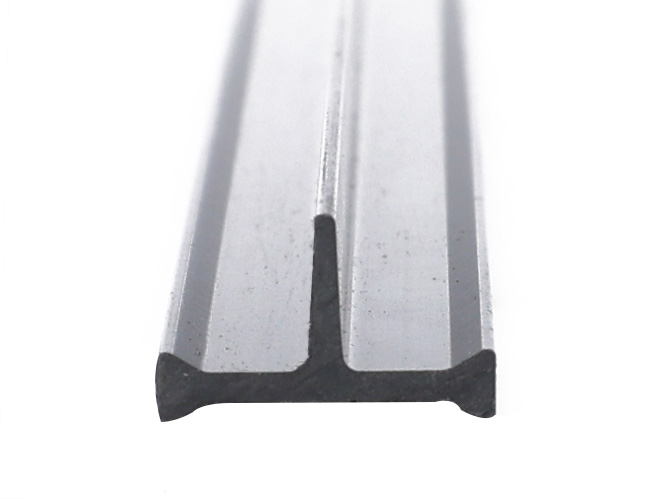
PA66 GF25 thermal barrier strips are commonly used in thermally broken aluminum profiles because their glass-fiber-reinforced polyamide composition provides a practical combination of thermal insulation and structural performance.
For applications requiring different profile configurations, manufacturers such as Bergman offer PA66 thermal barrier strips in various dimensions and cross-sectional designs. Selecting a suitable strip should be based on the aluminum profile geometry, assembly requirements, and intended thermal performance rather than material specifications alone.
Optimize the Overall Window Frame Design
A well-designed thermal break should work together with the glazing system, frame cavities, seals, and installation details.
Particular attention should be given to minimizing unnecessary metal connections between the interior and exterior sections. The positioning of the thermal barrier and the design of the glazing edge should also be considered to avoid localized cold spots.
These details can make a meaningful difference in condensation resistance, especially in cold climates.
Evaluate Condensation Resistance Under Actual Conditions
Thermal performance should be assessed using realistic indoor and outdoor temperature conditions, together with the expected indoor relative humidity.
Rather than relying exclusively on the overall window U-value, designers should also examine the minimum interior surface temperature. This helps identify areas where condensation is most likely to develop.
Relevant calculation methods include:
These methods support a more comprehensive evaluation of the completed design, although they should not be confused with material quality certification for an individual thermal barrier strip.
Ultimately, effective thermal break design is about more than reducing energy loss. By limiting heat transfer and maintaining warmer interior frame surfaces, it helps address one of the underlying causes of window condensation. Combining suitable thermal barrier materials with carefully designed aluminum profiles and appropriate humidity control can improve condensation resistance, support long-term window performance, and create a more comfortable indoor environment.