


For many commercial building owners, rising energy bills are a constant concern. The first solution that often comes to mind is upgrading the HVAC system. While installing more efficient air-conditioning equipment certainly helps, it does not address one of the biggest causes of energy loss—the building envelope itself.
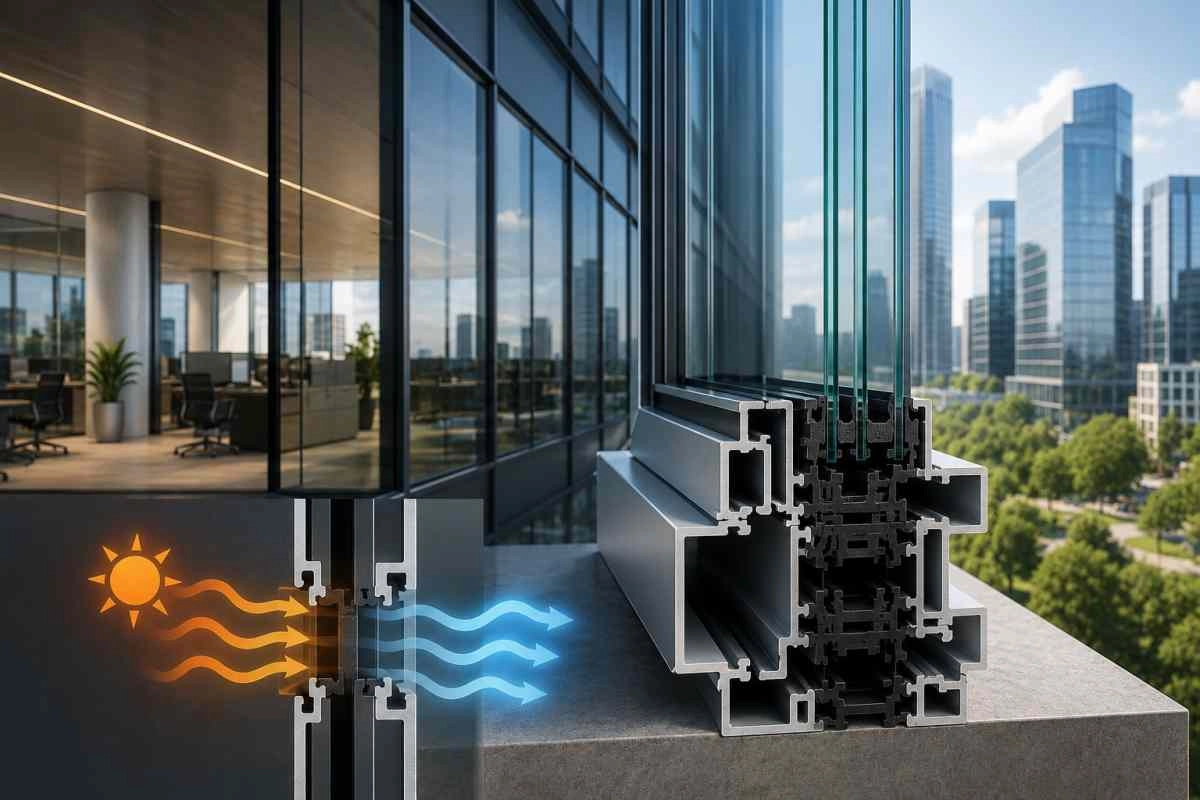
In many aluminum curtain wall systems, heat continuously passes through the metal frames, forcing heating and cooling equipment to work harder than necessary. This is where Thermal Break Strips deliver real value. Rather than producing cooling or heating, they help retain conditioned indoor air, allowing HVAC systems to operate more efficiently while creating a more comfortable indoor environment.
● Why Does Your HVAC System Always Seem to Be Running?
Many building managers have experienced the same frustrating situation. The air-conditioning operates almost continuously, yet employees still complain that meeting rooms feel warm in the afternoon, while workstations near the windows remain uncomfortable throughout the day.
In many cases, the HVAC equipment is not the problem. The issue is that aluminum frames act as thermal bridges, allowing outdoor heat to enter during summer and indoor heat to escape during winter. As temperatures fluctuate, the HVAC system repeatedly cycles on and off to maintain the desired indoor climate, increasing electricity consumption and accelerating equipment wear.
The difference can be summarized below.
Although Thermal Break Strips are hidden inside aluminum profiles, their influence extends to the overall efficiency of the entire HVAC system.
● Small Component, Big Difference
Unlike insulation boards or glazing systems, Thermal Break Strips are installed directly between the interior and exterior aluminum profiles, creating an insulating barrier that interrupts heat transfer through the frame.
The result is simple: less unwanted heat enters the building during summer, and less conditioned air escapes during winter. Instead of constantly compensating for heat loss, the HVAC system can maintain indoor temperatures with less effort.
For building owners, this often translates into benefits that are immediately noticeable. Interior spaces feel more consistent throughout the day, temperature differences between perimeter offices and interior rooms become less pronounced, and the air-conditioning system operates more smoothly instead of constantly starting and stopping.
● A Real Project That Demonstrated the Value
A contractor responsible for a six-story office building in Southeast Asia encountered an unexpected challenge after construction was completed. Although the project had been equipped with a modern HVAC system, occupants working near the curtain wall frequently reported excessive heat during the afternoon. Monthly electricity costs also exceeded the original design expectations.
After evaluating the facade, the engineering team identified the aluminum framing system as a significant source of thermal bridging. During a façade upgrade, reinforced Thermal Break Strips were integrated into the curtain wall profiles.
The improvement was noticeable during the following cooling season. Facility managers observed that indoor temperatures remained more stable throughout the day, reducing temperature complaints from employees. The HVAC system no longer operated at maximum capacity during peak afternoon hours, and annual cooling costs showed a measurable reduction. More importantly, the building owner viewed the upgrade as a long-term investment rather than a short-term repair, improving both operating efficiency and tenant satisfaction.
● Choosing the Right Thermal Break Strips Matters
Not all Thermal Break Strips deliver the same level of performance. For demanding curtain wall applications, both thermal efficiency and structural reliability are equally important.
High-quality solutions manufactured from reinforced PA66 offer several advantages. Their excellent thermal insulation properties reduce heat transfer, while high tensile strength and dimensional stability help maintain the integrity of aluminum profiles under continuous temperature changes. Precision extrusion also ensures a secure fit within curtain wall systems, improving both installation quality and long-term durability.
For commercial buildings such as office towers, hotels, hospitals, and shopping centers, curtain wall thermal barrier solutions designed with these characteristics provide dependable performance throughout years of service. Customizable dimensions allow them to match different aluminum profile designs, making them suitable for a wide range of architectural projects while supporting modern energy-efficiency requirements.
● A Question Building Owners Often Ask
"If my building already uses a high-efficiency HVAC system, are Thermal Break Strips still necessary?"
The answer is yes.
An efficient HVAC unit can only condition the air inside the building. If the curtain wall continuously transfers heat through aluminum frames, the system must keep working to replace the lost cooling or heating. In other words, better equipment cannot fully compensate for a poor building envelope.
By reducing thermal bridging, Thermal Break Strips help the HVAC system preserve conditioned air instead of constantly recreating it. The result is lower operating costs, greater occupant comfort, and less strain on mechanical equipment over the building's lifetime.
● A Smarter Way to Reduce Energy Costs
Lower energy bills are not always achieved by installing larger or more advanced HVAC equipment. Often, the greatest improvements come from preventing unnecessary energy loss in the first place.
Although Thermal Break Strips represent only a small portion of a curtain wall system, they have a lasting impact on building performance. By improving thermal efficiency, reducing HVAC workload, enhancing occupant comfort, and supporting long-term durability, they provide measurable value throughout the entire lifecycle of a building.
For developers, architects, and facility managers looking to maximize return on investment, choosing high-performance Thermal Break Strips is not simply a material decision—it is a practical strategy for creating buildings that are more efficient, more comfortable, and more economical to operate for years to come.