


Modern aluminum windows, doors, and curtain walls are expected to do far more than provide structural support. They must also deliver excellent energy efficiency, indoor comfort, and long-term durability. Achieving these goals depends on a well-designed Thermal Break System—a combination of components that work together to reduce heat transfer while maintaining structural performance.
Many people assume that a thermal break system consists of only a Thermal Break Strip, but in reality, it is an integrated assembly. Each component contributes to the system's overall performance, with the Thermal Break Strip serving as the core element that connects structural strength with thermal insulation.
Understanding the Main Components of a Thermal Break System
A high-performance Thermal Break System typically consists of four essential components.
| Component | Primary Function | Contribution to Building Performance |
|---|---|---|
| Thermal Break Strip | Separates interior and exterior aluminum profiles | Reduces thermal bridging while maintaining structural integrity |
| Aluminum Profiles | Form the structural frame | Provide strength, rigidity, and corrosion resistance |
| Insulated Glass | Limits heat transfer through glazing | Improves energy efficiency and occupant comfort |
| Gaskets & Sealants | Prevent air and water infiltration | Enhance weather resistance and airtightness |
Among these components, the Thermal Break Strip plays the most critical role because it directly interrupts the heat flow through aluminum frames. Without it, even high-performance glass cannot completely eliminate thermal bridging.
Meanwhile, insulated glazing minimizes heat transfer through the glass itself, while quality gaskets and sealants ensure airtightness and prevent moisture intrusion. Together, these components create a balanced system capable of meeting modern building performance standards.
Why the Thermal Break Strip Is the Core of the System
Although relatively small in size, the Thermal Break Strip performs two essential functions simultaneously.
Interrupting the Thermal Path
First, it interrupts the direct thermal path between the interior and exterior aluminum sections. Since aluminum is an excellent heat conductor, separating the two profiles with a reinforced polyamide strip dramatically reduces heat transfer and helps stabilize indoor temperatures throughout the year.
Providing Structural Connection
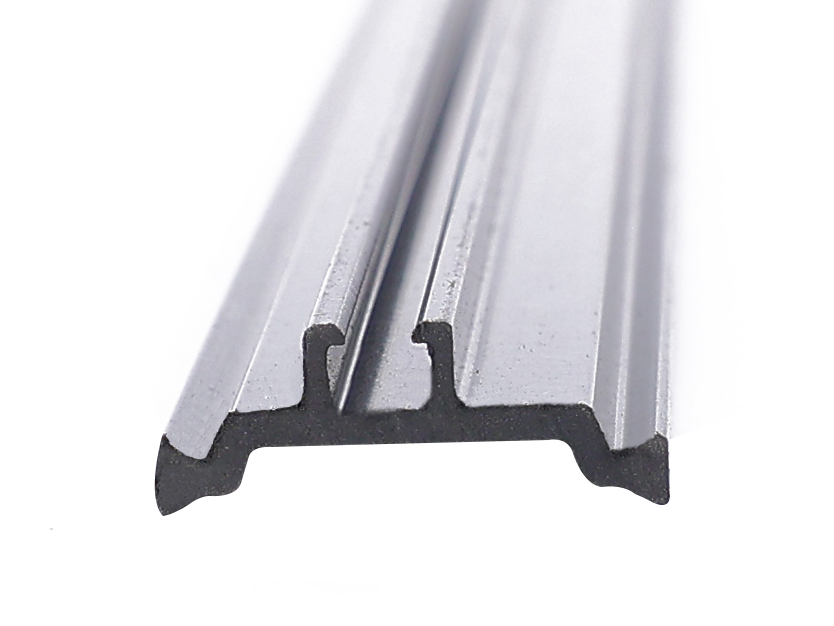
Equally important, the strip serves as a structural connector. It must withstand wind loads, glass weight, thermal expansion, and years of daily temperature fluctuations without losing dimensional stability. For this reason, high-performance Thermal Break Strips are commonly manufactured from PA66 reinforced with glass fiber, providing an excellent balance of low thermal conductivity and high mechanical strength.
When these two functions are combined, the Thermal Break Strip becomes the component that largely determines the overall performance of the entire thermal break system.
Quality Components Create Long-Term Value
Not all Thermal Break Strips are manufactured to the same standard. In demanding applications such as commercial curtain walls and high-end window systems, selecting a high-quality strip can significantly improve long-term building performance.
Premium Thermal Break Strips manufactured from reinforced PA66 offer several important advantages. They maintain excellent dimensional stability under continuous temperature cycling, provide high tensile strength for structural reliability, and resist weathering, UV exposure, and moisture over many years of service. Precision extrusion technology also ensures accurate dimensions, allowing the strip to fit aluminum profiles securely and consistently.
In addition, customization options for width, thickness, length, and profile design allow these products to match different aluminum systems, making them suitable for hotels, office buildings, shopping centers, hospitals, schools, and residential developments.
Rather than simply reducing heat loss, a well-engineered Thermal Break Strip helps lower maintenance costs, extend façade lifespan, and improve the long-term value of the entire building.
Installation Case: Upgrading a Commercial Office Building
A recent office renovation project illustrates the practical value of a quality Thermal Break System.
A twelve-story commercial office building located in Southeast Asia experienced frequent occupant complaints about uncomfortable temperatures near its curtain wall. During the rainy season, condensation regularly appeared on the interior aluminum frames, while the HVAC system struggled to maintain consistent indoor conditions.
During the renovation, the original thermal break components were replaced with reinforced PA66 Thermal Break Strips specifically designed for curtain wall applications. The upgraded strips offered higher mechanical strength, improved dimensional stability, and precise compatibility with the existing aluminum profiles.
After approximately one year of operation, building management reported noticeable improvements.
Choosing high-quality Thermal Break Strips not only improves insulation performance but also enhances durability, reduces maintenance costs, and supports long-term building value. As energy standards continue to evolve, investing in a reliable thermal break system has become an essential step toward creating more efficient, comfortable, and sustainable buildings.