


Curtain wall systems represent one of the most thermally vulnerable elements in a building envelope. As non-load-bearing cladding that spans full floor-to-ceiling heights across continuous aluminium or steel framing, they create direct conductive pathways between exterior conditions and conditioned interior spaces. Thermal break strips — also called thermal barrier profiles or insulating strips — interrupt these pathways by inserting a low-conductivity material within the metal frame cross-section. Selecting the wrong strip for a given curtain wall specification does not merely reduce energy performance; it can introduce condensation risk, structural weakness, and long-term facade deterioration. This guide addresses the parameters that govern that selection.
1Understanding the Role of Thermal Break Geometry in Curtain Wall Frames
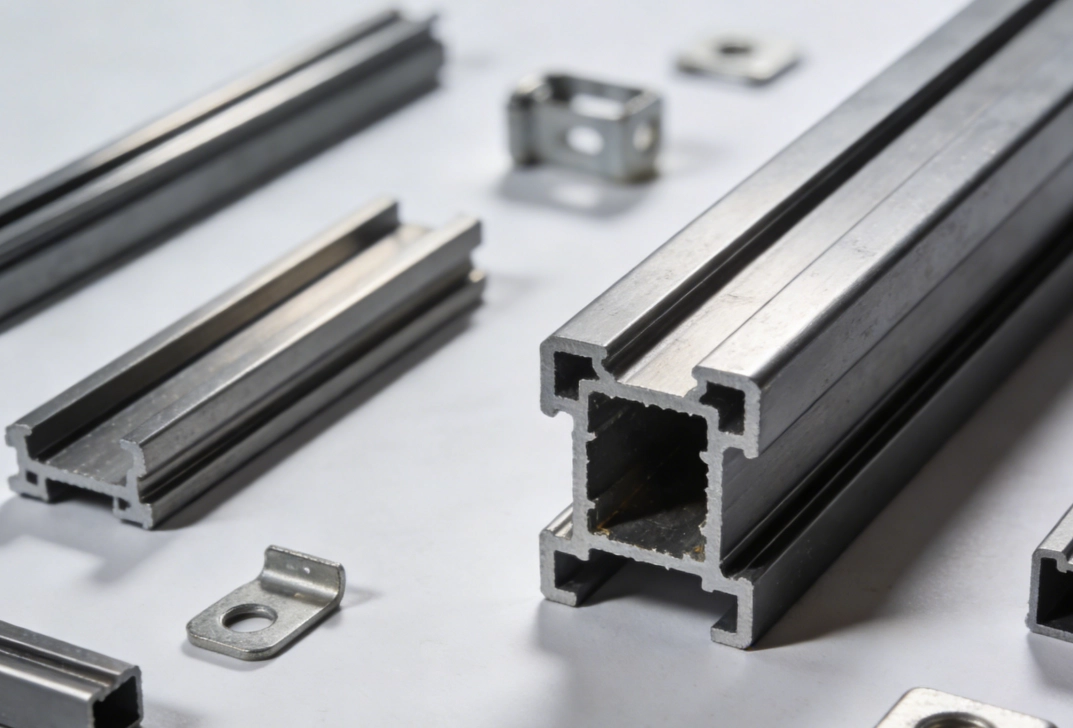
In a curtain wall mullion or transom, the thermal break strip does more than thermally decouple inner and outer aluminium shells — it also functions as a structural bridge that must transmit wind loads, dead loads from glazing and panel infills, and differential thermal movement across the frame. This dual structural-thermal role distinguishes curtain wall strip selection from the simpler requirements of window or door frame applications.
The critical geometric parameters are:
- Strip width (the insulating bridge dimension): wider strips reduce thermal conductance but reduce structural stiffness of the composite frame section; standard widths for curtain wall applications range from 24 mm to 34 mm, with wider sections used in passive or near-zero-energy building (NZEB) specifications
- Strip depth: matches the frame depth and determines the contact area with aluminium; insufficient depth creates stress concentrations at the aluminium-polymer interface under load
- Profile geometry (I, T, U, or custom extrusion): determines how the strip keys into the aluminium channel through roll-forming or polyurethane pouring processes; the interlocking geometry governs shear transfer and pull-out resistance
Standards Note: Design engineers should verify that the composite aluminium-strip section meets the structural performance requirements of the relevant standard — typically EN 14024 for European projects or AAMA TIR-A8 for North American applications — before thermal performance calculations are performed.
2Material Selection: Thermal Conductivity vs. Mechanical Demand
Polyamide 66 reinforced with glass fibre (PA66 GF) is the dominant material for curtain wall thermal break strips by a significant margin, and for good reason. Its combination of low thermal conductivity, high tensile and compressive strength, chemical resistance, and dimensional stability under sustained load makes it the only material currently qualified to EN 14024 structural requirements across the full range of curtain wall load cases.
The glass fibre content — typically between 25% and 30% — is a meaningful variable:
- PA66 GF25 Granules: offers a thermal conductivity of approximately 0.30 W/m·K and sufficient strength for the majority of standard curtain wall frames; it is the baseline specification for most commercial projects
- PA66 GF30 Granules: increases glass fibre content to raise tensile and compressive strength by approximately 15–20%, at a marginal increase in conductivity; appropriate for high-wind-load facades, tall buildings, or large-format panel systems where bending moments in the frame are elevated
Aerogel composite strips represent the emerging premium tier, offering thermal conductivities as low as 0.015–0.020 W/m·K — an order of magnitude below conventional PA66. Their application is currently concentrated in passive house, NZEB, and certified low-energy facade projects where the frame contribution to overall Uf value requires minimisation. Structural performance must be independently verified for each aerogel composite product, as mechanical properties vary significantly between manufacturers.
The table below summarises key material properties across the principal strip types used in curtain wall applications.
MATERIAL PROPERTIES COMPARISON
| Material | Thermal Cond. (W/m·K) | Compressive Strength | UV Resistance | Typical Application |
|---|---|---|---|---|
| PA66 GF25 | 0.30 | Excellent | Good | Standard CW frames |
| PA66 GF30 | 0.32 | Superior | Good | High-load CW systems |
| PVC-based | 0.17 | Moderate | Fair | Low-load / interior |
| PPSU Composite | 0.26 | High | Excellent | High-performance CW |
| Aerogel Hybrid | 0.015–0.020 | Moderate | Excellent | Passive house / NZEB |
3Thermal Performance Metrics: What the Numbers Actually Mean
Specifying a strip by material alone is insufficient. The relevant performance metric for a curtain wall application is the linear thermal transmittance of the frame section (the Ψ-value, expressed in W/m·K), which accounts for the combined effect of strip width, material conductivity, aluminium section geometry, and frame depth. This value is used in energy modelling and compliance calculations under standards such as ISO 10077-2 or THERM simulation.
Key thermal parameters to verify with the strip manufacturer or system supplier:
- Declared thermal conductivity (λ): this must be the aged, stabilised value tested in accordance with EN ISO 10456, not the initial measured value, which may be up to 20% lower before thermal ageing stabilises the material
- Frame Uf value contribution: the strip's effect on frame thermal transmittance should be quantified for the specific aluminium section in question; a strip with lower λ does not automatically produce a lower Uf if the frame geometry creates significant two-dimensional heat flow effects around the strip
- Thermal cycling performance: the strip must maintain dimensional and mechanical stability across the service temperature range expected for the facade orientation and climate zone; for south-facing facades in high-solar-climates, surface temperatures can exceed 80°C, requiring materials with rated service temperatures of at least 100°C continuous
4Structural Integrity and Load Transfer Verification
A thermal break strip that softens, creeps, or delaminates under sustained mechanical load represents a facade safety risk, not merely a performance deficiency. The structural adequacy of the strip within the composite frame section must be verified against the design wind pressure and dead load requirements of the project.
The parameters governing structural suitability include:
- Shear strength of the strip-aluminium interface: verified through the roll-forming or pouring process qualification; EN 14024 requires a minimum shear strength of 3.5 kN per 100 mm of strip length under transverse load
- Creep resistance under sustained load: PA66-based strips must demonstrate less than 0.5% deformation under design service stress over a period of 10,000 hours; creep failure manifests as progressive frame deflection and eventual joint seal failure
- Impact resistance at low temperature: facades in cold climates subject to maintenance access or accidental impact must use strips that retain adequate toughness at temperatures down to −30°C or lower as specified
- Compatibility with frame assembly process: roll-crimping, knurling pattern, and surface treatment of the aluminium channel must be matched to the strip type; incompatible combinations produce inadequate mechanical interlock regardless of material quality
5Certification, Traceability, and Supply Chain Verification
Thermal break strips for curtain wall applications are structural components, and their procurement should be treated accordingly. Specifying a product by material description alone — without reference to certified test data and a defined supply chain — exposes the project to substitution risk during procurement and construction.
The minimum verification requirements for a robust specification are:
- Third-party certification to EN 14024 or equivalent: confirming that the specific strip profile has been tested as part of a qualified composite frame system, not in isolation
- Traceability documentation: batch-level records linking delivered product to certified test specimens; particularly important where aerogel or novel composite materials are specified
- Dimensional tolerances: manufacturer's declared tolerances for strip width, depth, and straightness, verified against the aluminium frame channel dimensions to ensure assembly compatibility
- Fire performance classification: relevant where the curtain wall system requires a declared fire resistance or reaction-to-fire class under EN 13501 or local building regulations
CONCLUSION
Thermal break strip selection for curtain wall systems is an engineering decision that sits at the intersection of thermal physics, structural mechanics, and materials science. The correct strip is not simply the one with the lowest thermal conductivity or the lowest unit cost — it is the one whose geometry, material properties, structural performance, and certification status are matched to the specific demands of the frame system, building load case, climate exposure, and energy performance target. Engaging with this specification process with appropriate technical rigour is one of the most cost-effective investments available in the design of a high-performance curtain wall facade.