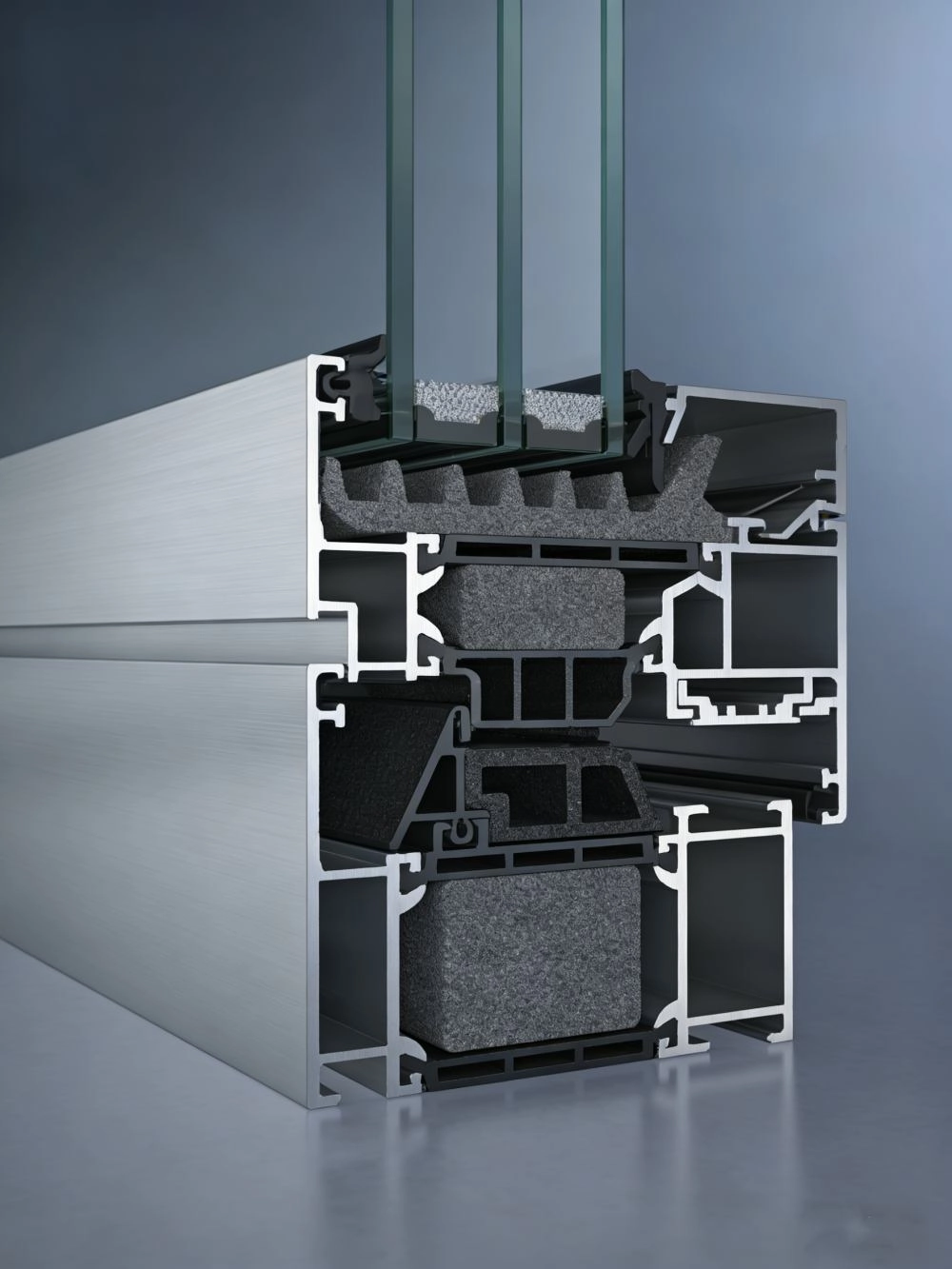


Thermal break strips play a crucial role in improving the energy efficiency and durability of aluminum window, door, and curtain wall systems. Because aluminum is highly conductive, heat can easily travel through the frame, creating thermal bridges that reduce insulation performance. Thermal break strips—typically made from reinforced polyamide materials—interrupt this heat flow by separating the interior and exterior aluminum profiles. However, selecting the appropriate thermal break strip is not simply a matter of material choice. Different climate zones impose different thermal, mechanical, and environmental demands on building envelopes, which means the design and specifications of thermal break strips should be adapted accordingly.
Understanding the Impact of Climate on Thermal Performance
Climate conditions strongly influence the performance requirements of building components. Temperature extremes, humidity levels, solar radiation, and seasonal temperature fluctuations all affect how heat moves through a building envelope. In cold climates, the primary concern is minimizing heat loss and preventing condensation on interior surfaces. In hot climates, reducing solar heat gain becomes the priority. Meanwhile, regions with large temperature variations require materials capable of maintaining stability despite frequent thermal expansion and contraction.
Thermal break strips help control these effects by reducing heat transfer between the interior and exterior sides of aluminum frames. However, the effectiveness of this function depends on factors such as the strip’s width, material formulation, reinforcement level, and compatibility with the aluminum profile system.
Material Selection and Reinforcement Considerations
Most high-performance thermal break strips are manufactured from polyamide (PA66) reinforced with glass fibers , typically in proportions such as GF25 or GF30. This combination provides a balance between thermal insulation and mechanical strength. Polyamide offers relatively low thermal conductivity compared with metals, while glass fiber reinforcement improves stiffness, dimensional stability, and resistance to deformation under load.
In colder regions, higher insulation performance is often required, which may involve wider thermal break strips to increase the thermal separation distance. In hot climates, UV resistance and long-term stability under high temperatures become more important considerations. In coastal or humid environments, materials must also demonstrate resistance to moisture absorption and environmental aging.
Matching Thermal Break Specifications to Climate Zones
Different climate zones present unique challenges for aluminum systems. The following table summarizes key factors to consider when selecting thermal break strips for various environmental conditions.
| Climate Zone | Primary Thermal Challenge | Recommended Thermal Break Characteristics | Additional Considerations |
| Cold climates (northern regions) | Heat loss and interior condensation | Wider thermal break strips, high insulation performance | Improved sealing systems and condensation control |
| Hot climates (tropical or desert regions) | Solar heat gain and frame overheating | UV-resistant polyamide materials, stable under high temperatures | Solar shading and reflective glazing |
| Temperate climates | Seasonal temperature fluctuations | Balanced insulation and structural strength | Flexibility to accommodate expansion and contraction |
| Coastal or humid regions | Moisture exposure and corrosion risk | Moisture-resistant polyamide formulations | Corrosion-resistant aluminum finishes |
| High-altitude regions | Large daily temperature variations | High dimensional stability and reinforced materials | Enhanced structural performance for wind loads |
This approach allows designers and engineers to align material specifications with the environmental stresses the building will experience throughout its service life.
Structural and Thermal Balance
Although thermal insulation is the primary function of a thermal break strip, structural performance must not be overlooked. Aluminum frames often support large glass panels and must resist wind pressure, thermal expansion, and mechanical loads. If the thermal break strip lacks sufficient strength or stiffness, the system may experience deformation, misalignment, or failure of seals.
Glass fiber reinforced polyamide offers excellent tensile and flexural strength, allowing it to function not only as a thermal barrier but also as a structural connector between aluminum sections. The similar coefficient of thermal expansion between polyamide and aluminum further helps reduce internal stresses when temperatures change, improving long-term durability.
Importance of Proper Design Integration
Choosing the correct thermal break strip is only one aspect of optimizing building performance. The strip must also be properly integrated into the aluminum profile design. This includes ensuring accurate dimensions, precise installation, and compatibility with other components such as gaskets, glazing systems, and insulation materials.
For example, wider thermal breaks can improve insulation performance but may require adjustments to profile geometry or fastening systems. Similarly, reinforced materials may increase structural capacity but require precise manufacturing tolerances to ensure proper mechanical interlocking with the aluminum profiles.
Design integration therefore requires coordination between material selection, profile engineering, and building performance requirements.
Long-Term Performance and Sustainability
Climate-specific selection of thermal break strips also contributes to long-term sustainability. Buildings designed with appropriate thermal break systems consume less energy for heating and cooling, which reduces operational costs and environmental impact. Additionally, durable materials reduce maintenance requirements and extend the service life of building components.
As energy regulations become stricter in many regions, properly designed thermal break systems are increasingly essential for meeting building efficiency standards. Polyamide-based thermal break strips have become the preferred solution because they combine insulation performance with structural reliability.
Selecting thermal break strips for aluminum building systems requires careful consideration of the climate conditions in which the building will operate. Cold climates demand superior insulation and condensation control, while hot regions prioritize heat resistance and solar protection. Humid or coastal environments require materials with enhanced moisture resistance, and areas with large temperature fluctuations benefit from reinforced materials with high dimensional stability.
By matching the properties of thermal break strips—such as material composition, width, and reinforcement—to the specific environmental conditions of a project, designers and engineers can significantly improve the thermal efficiency, durability, and overall performance of aluminum windows, doors, and curtain wall systems. Thoughtful selection not only enhances building comfort but also supports long-term energy efficiency and sustainable architectural design.