

How to Select Thermal Barrier Strips for Different Climate Conditions?

Jun 22, 2026 Viewd 36
BUILDING MATERIALS · CLIMATE ENGINEERING

How to Select Thermal Barrier Strips for Different Climate Conditions?

Thermal BreakPA66 PolyamideAluminum Systems

Thermal Break Strips are critical components in aluminum window, door, and curtain wall systems. Their primary function is to reduce heat transfer between indoor and outdoor environments by interrupting the thermal bridge created by metal frames. However, climate conditions play a decisive role in determining the most suitable type of Thermal Break Strips. A design that performs well in mild regions may fail in extreme cold, high humidity, or desert environments.

Selecting the right product requires understanding how temperature range, humidity levels, UV exposure, and building usage influence material behavior. Among common materials, reinforced polyamide-based Thermal Break Strips are widely adopted due to their balance of thermal insulation and mechanical strength.

Understanding Climate Influence on Thermal Break Performance

Different climates place different demands on building envelope systems. Aluminum expands and contracts significantly under temperature variation, and this movement is transferred directly to the thermal break interface.

In cold climates, materials must resist brittleness and maintain flexibility at low temperatures. In hot climates, resistance to softening and creep becomes more important. In humid or coastal regions, moisture absorption and long-term stability are key concerns.

A properly selected Thermal Break Strip ensures that the frame maintains:

Structural integrity
Consistent insulation performance
Resistance to deformation
Stable sealing conditions

Climate-Specific Selection Guide

1COLD

Cold Climate Conditions (Sub-zero to low temperatures)

In cold regions, the main challenge is heat loss and material brittleness. Aluminum frames without proper insulation often create cold bridges, leading to condensation and energy inefficiency.

For these conditions, Thermal Break Strips must provide:

High impact resistance at low temperatures
Stable dimensional performance under contraction stress
Strong bonding with aluminum profiles

Reinforced PA66-based strips perform well because they maintain toughness even in low temperatures. Their fiber reinforcement helps prevent cracking under repeated freeze–thaw cycles.

A well-selected strip helps reduce:

Interior surface freezing near framesCondensation on window edgesHeat loss through façades
2HOT

Hot and Dry Climate Conditions

In desert or high-temperature regions, the primary challenge is heat gain and material softening under sustained exposure.

Thermal Break Strips used in these environments must withstand:

High surface temperatures
UV radiation exposure
Long-term structural creep

Glass-fiber reinforced polyamide is commonly used because it retains stiffness even when temperatures rise. Unlike many standard plastics, it does not easily deform under continuous heat load.

In practice, high-quality Thermal Break Strips improve:

Indoor cooling efficiencyFrame stability under solar exposureLong-term dimensional accuracy
3HUMID

Humid and Coastal Climate Conditions

High humidity and salt exposure introduce additional challenges. Moisture can affect material stability and long-term mechanical performance if the material is not properly engineered.

In these environments, Thermal Break Strips must demonstrate:

Controlled moisture absorption behavior
Resistance to hydrolysis over time
Stable mechanical strength in wet conditions

Reinforced PA66 performs reliably when properly formulated, maintaining structural integrity even under long-term humidity exposure. This helps prevent issues such as frame loosening or reduced sealing performance.

4MIXED

Mixed Climate Conditions (Seasonal variation)

Many regions experience significant seasonal changes, where temperatures fluctuate between hot summers and cold winters. This creates repeated expansion and contraction cycles in aluminum systems.

In such environments, Thermal Break Strips must provide:

Excellent fatigue resistance
Stable thermal expansion compatibility with aluminum
Long-term dimensional stability

A key advantage of polyamide-based strips is that their thermal expansion behavior closely matches aluminum. This reduces internal stress at the interface and improves long-term system durability.

Climate-Based Selection Overview

Climate Type Key Challenge Required Strip Performance Recommended Material Behavior
Cold Climate Heat loss, brittleness Low-temp toughness, anti-crack High impact resistance
Hot Climate Softening, UV exposure Heat resistance, creep control High thermal stability
Humid/Coastal Moisture, corrosion stress Hydrolysis resistance Stable mechanical strength
Mixed Climate Expansion & contraction Fatigue resistance Al-compatible expansion

Practical Engineering Perspective

In real-world applications, selection is not only about climate but also building type. For example, high-rise curtain walls experience stronger wind pressure and require more structurally stable Thermal Break Strips than residential windows, even under the same climate conditions.

Engineers often prioritize:

01
Reinforcement level (e.g., glass fiber content)
02
Profile geometry
03
Load-bearing requirements
04
Long-term aging resistance

A well-designed system ensures that thermal performance does not degrade over time due to mechanical failure.

How Thermal Break Strips Perform in Practice

In actual installation scenarios, contractors often notice differences between low-grade and high-quality Thermal Break Strips. Poor-quality strips may feel softer during assembly and sometimes lead to slight misalignment in aluminum profiles.

In contrast, reinforced polyamide strips tend to provide a more stable "fit feel" during extrusion and assembly. Over time, buildings using higher-quality strips generally show fewer complaints related to window drafts or frame condensation.

A common observation is that after several seasonal cycles, systems using properly selected Thermal Break Strips maintain smoother window operation and more consistent indoor comfort, especially in perimeter zones.
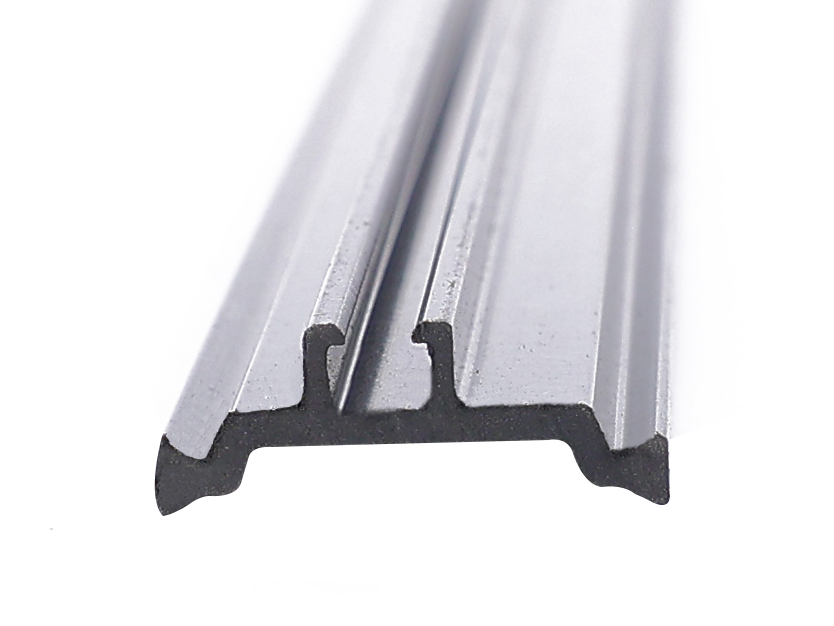

BGM-CH30(4)

Conclusion

Selecting Thermal Break Strips for different climate conditions requires more than choosing a standard insulation component. It involves balancing thermal performance, mechanical strength, and environmental resistance.

Reinforced polyamide-based Thermal Break Strips offer a versatile solution suitable for cold, hot, humid, and mixed climates due to their stability and compatibility with aluminum systems. When properly matched to environmental conditions, they significantly improve energy efficiencystructural durability, and long-term building performance.

0086-0572-3237288