


Modern curtain wall systems have transformed the appearance of commercial buildings, making large glass façades and slim aluminum profiles the standard choice for offices, hotels, airports, and shopping centers. While aluminum offers excellent strength, corrosion resistance, and design flexibility, it introduces one major engineering challenge: heat moves through aluminum extremely quickly.
Without an effective thermal barrier, the curtain wall frame itself can become one of the largest pathways for energy loss in the building envelope. This is precisely where Thermal Break Strips become essential.
The Hidden Weakness of Aluminum Curtain Walls
Aluminum conducts heat approximately one thousand times more efficiently than many polymer materials. In a conventional frame, the interior and exterior aluminum sections are directly connected, creating a continuous path for heat transfer.
During winter, indoor heat escapes through the frame to the colder outdoor environment. During summer, solar heat absorbed by the exterior profile travels inward, increasing cooling demand.
The challenge becomes more significant as buildings become taller and glazing areas increase. In many modern office towers, curtain walls account for a substantial proportion of the building envelope, meaning even small improvements in frame performance can produce noticeable energy savings over the building's lifecycle.
Breaking the Thermal Bridge
The primary function of Thermal Break Strips is to interrupt this conductive path.
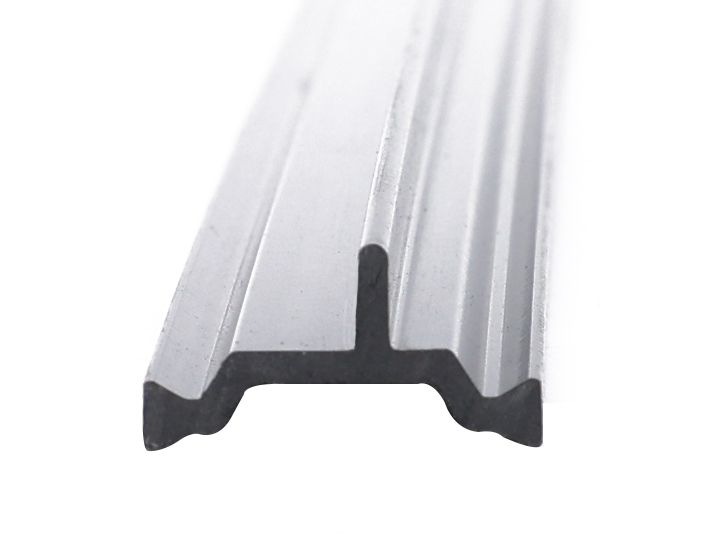
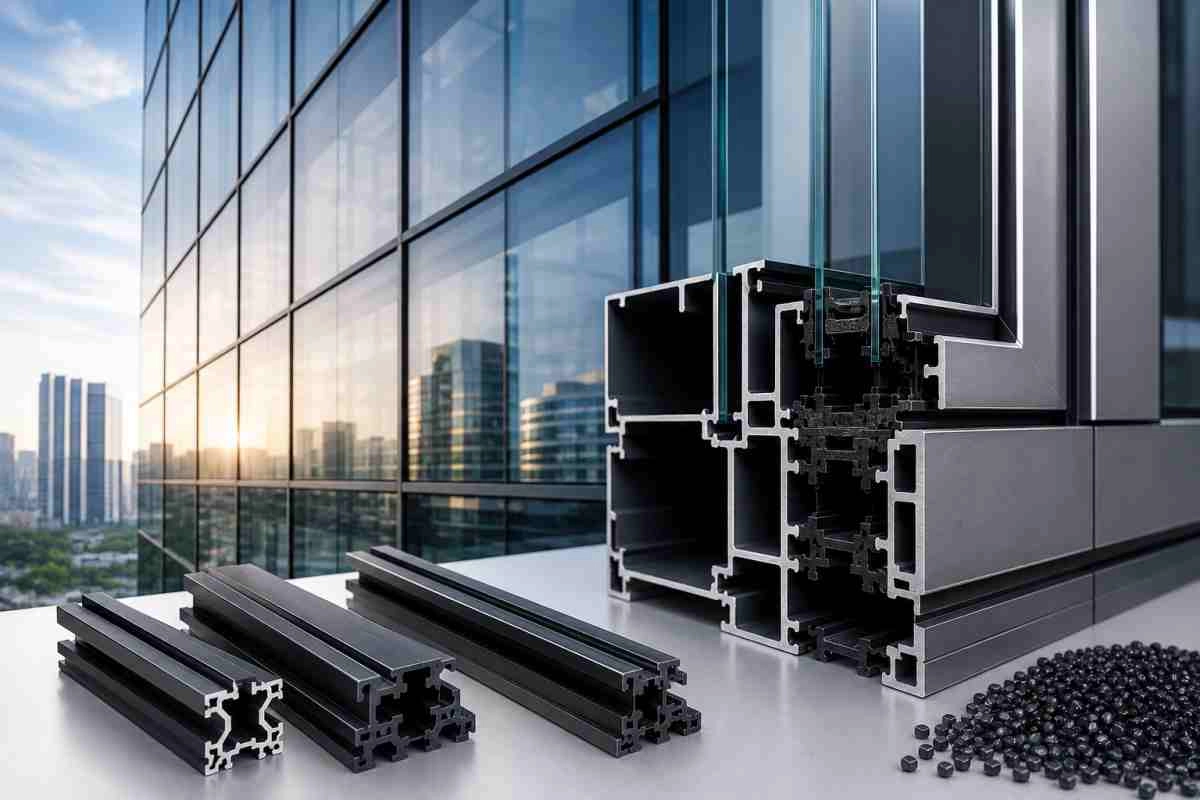
By inserting a low-conductivity polyamide barrier between the interior and exterior aluminum profiles, heat transfer is dramatically reduced while the structural connection between the two metal sections is maintained.
The difference can be summarized simply:
Although the thermal break itself occupies only a small portion of the frame, its influence extends across the entire façade system.
Comfort Is Often the First Difference Occupants Notice
Energy efficiency calculations are important to engineers, but building occupants usually notice something much simpler: comfort.
Anyone who has worked near a poorly insulated curtain wall during winter may recognize the sensation of sitting beside a cold surface despite the heating system operating normally. In summer, the opposite problem occurs, with perimeter zones becoming noticeably warmer than the rest of the office.
By reducing heat transfer through the frame, Thermal Break Strips help maintain more uniform surface temperatures around windows and façades. The result is a workspace that feels more comfortable throughout the year and allows interior layouts to make better use of areas close to the glass.
This improvement is particularly valuable in hotels, office buildings, hospitals, and educational facilities where occupant comfort directly influences user experience.
Condensation Is More Than Just a Cosmetic Issue
When warm indoor air contacts a cold aluminum frame, condensation can form on the interior surface. Many building owners initially assume the glass is responsible, but in practice the aluminum frame is often the weakest thermal point in the system.
Persistent condensation may lead to:
- staining around window frames;
- deterioration of surrounding finishes;
- mold growth in concealed areas;
- premature aging of seals and gaskets.
Thermally broken curtain wall systems raise the temperature of the interior frame surface, greatly reducing the likelihood of condensation forming during cold weather conditions.
For facilities such as hospitals and hotels where indoor environmental quality is a priority, this benefit is often just as important as energy savings.
Managing Structural Stress Over Time
Curtain walls are exposed to constant environmental change. Daily temperature fluctuations cause aluminum profiles to expand and contract, while wind pressure continuously applies load to the façade.
Over years of operation, these movements can affect seal performance and system durability.
High-quality Thermal Break Strips manufactured from reinforced polyamide materials provide more than insulation; they contribute to structural stability by maintaining dimensional consistency under thermal cycling and mechanical load.
This is one reason why curtain wall applications often require thermal breaks with higher tensile strength and stricter manufacturing tolerances than those used in standard window systems.
Selecting Thermal Break Strips for Curtain Wall Systems
Not all thermal breaks are designed for the demands of large façade structures. When selecting materials for curtain wall applications, engineers typically focus on several critical factors:
Curtain wall thermal barriers designed specifically for façade applications often combine high mechanical strength with low thermal conductivity, allowing them to support large glazing systems without compromising energy performance.
Products developed for curtain wall assemblies, such as reinforced polyamide thermal barrier solutions, are increasingly being specified in projects where energy regulations and occupant comfort standards continue to rise.
A Small Component with a Large Impact
From the outside, a thermal break strip may appear to be a minor component hidden inside an aluminum profile. In reality, it plays an important role in determining how a curtain wall performs over decades of service.
It influences energy consumption, condensation resistance, occupant comfort, maintenance requirements, and even the durability of the façade itself.