


Modern aluminum windows and doors are expected to provide more than structural strength and an attractive appearance. Energy efficiency, thermal insulation, dimensional stability, and long-term durability have become equally important considerations. However, aluminum is naturally a highly conductive material, which means heat can easily transfer through conventional aluminum frames. This is where thermal break technology becomes essential. At the center of this technology is the polyamide thermal break strip, a specialized component that separates aluminum profile sections while maintaining their mechanical connection. Its material properties and manufacturing quality directly influence the overall performance of thermal break aluminum systems.
1What Is a Polyamide Thermal Break Strip?
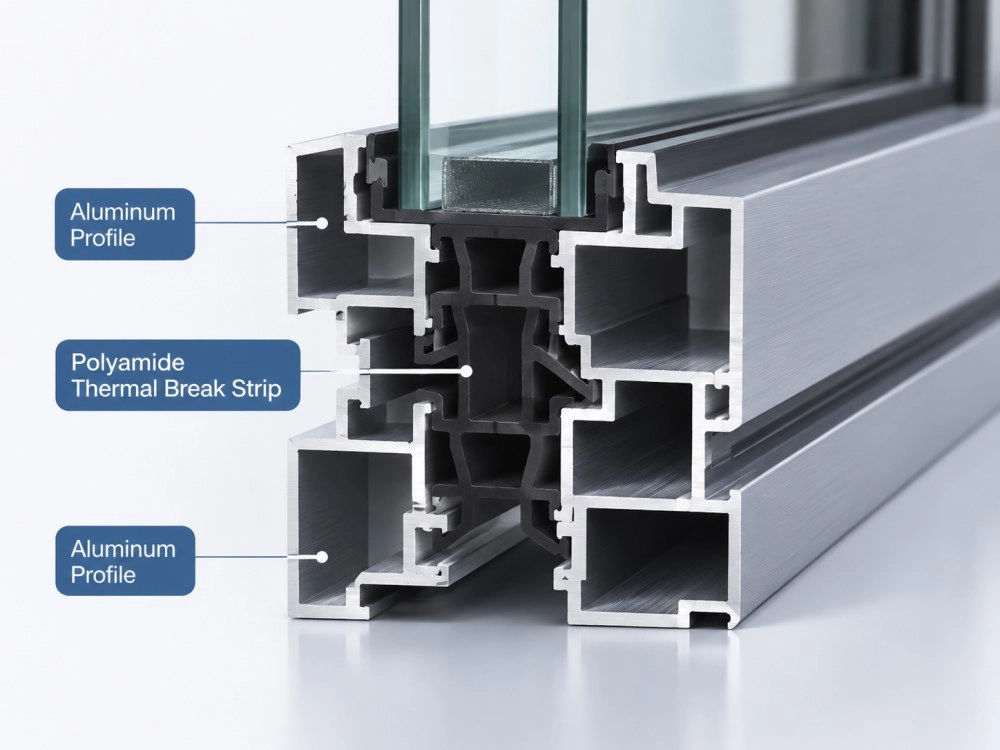
A polyamide thermal break strip is an insulating component installed between the interior and exterior sections of aluminum profiles. It creates a thermal barrier that reduces direct heat transfer through the metal frame while connecting the two aluminum sections into a unified structure.
Unlike conventional aluminum profiles, which allow heat to travel relatively easily from one side to the other, thermal break aluminum profiles incorporate an insulating material between their metal sections. Polyamide, particularly glass-fiber-reinforced PA66, is widely used for this purpose because it combines relatively low thermal conductivity with the mechanical properties required for profile assembly.
| CONVENTIONAL ALUMINUM PROFILE | ||
| Interior | Exterior | |
| THERMAL BREAK ALUMINUM PROFILE | ||
| Interior | Strip | Exterior |
Thermal break strips are commonly used in aluminum windows, doors, curtain walls, and other building envelope systems. Their cross-sectional designs vary according to the aluminum profile structure, with different widths, thicknesses, and configurations available to accommodate specific applications.
The basic function is straightforward: reduce thermal bridging while maintaining a reliable connection between aluminum profile sections. However, achieving this balance requires suitable material selection, accurate dimensions, and consistent manufacturing quality.
2Why Polyamide Quality Matters
The performance of a thermal break system depends heavily on the properties of its insulating material. Even when aluminum profiles are well designed, an unsuitable or inconsistent thermal break strip may affect insulation performance, mechanical stability, and long-term reliability.
Glass-fiber-reinforced PA66 offers several advantages that make it suitable for thermal break applications.
|
Low Thermal Conductivity Polyamide has significantly lower thermal conductivity than aluminum. When installed between aluminum profile sections, it helps reduce heat transfer through the frame. This contributes to improved thermal insulation and helps aluminum windows and doors achieve better overall energy efficiency. |
|
Mechanical Strength and Structural Stability Thermal break strips must withstand the mechanical forces involved in profile assembly and everyday use. Glass fiber reinforcement improves the stiffness and strength of PA66, helping the strips maintain their shape and support a stable connection between aluminum sections. This is particularly important during mechanical rolling and subsequent window and door applications. |
|
Dimensional Stability Accurate dimensions are essential for thermal break strips. They must fit the corresponding aluminum profile grooves properly to achieve reliable mechanical engagement. High-quality PA66 materials and controlled manufacturing processes help maintain dimensional consistency, reducing the risk of fitting problems during assembly. |
|
Heat Resistance and Durability Thermal break strips are exposed to changing temperatures throughout their service life. Glass-fiber-reinforced PA66 is suitable for applications involving temperature variations and demanding operating conditions. Its material characteristics help support long-term performance when the product is properly manufactured, stored, and installed. |
|
Versatile Profile Design Different aluminum systems require different thermal break configurations. Polyamide thermal break strips can be manufactured in various cross-sectional shapes and dimensions to match specific profile designs. This flexibility makes them suitable for a wide range of architectural applications. |
Inside the Manufacturing Process
Material selection is only one part of producing reliable thermal break strips. Manufacturing equipment, extrusion conditions, glass fiber distribution, dimensional control, and quality inspection all contribute to the consistency of the finished product.

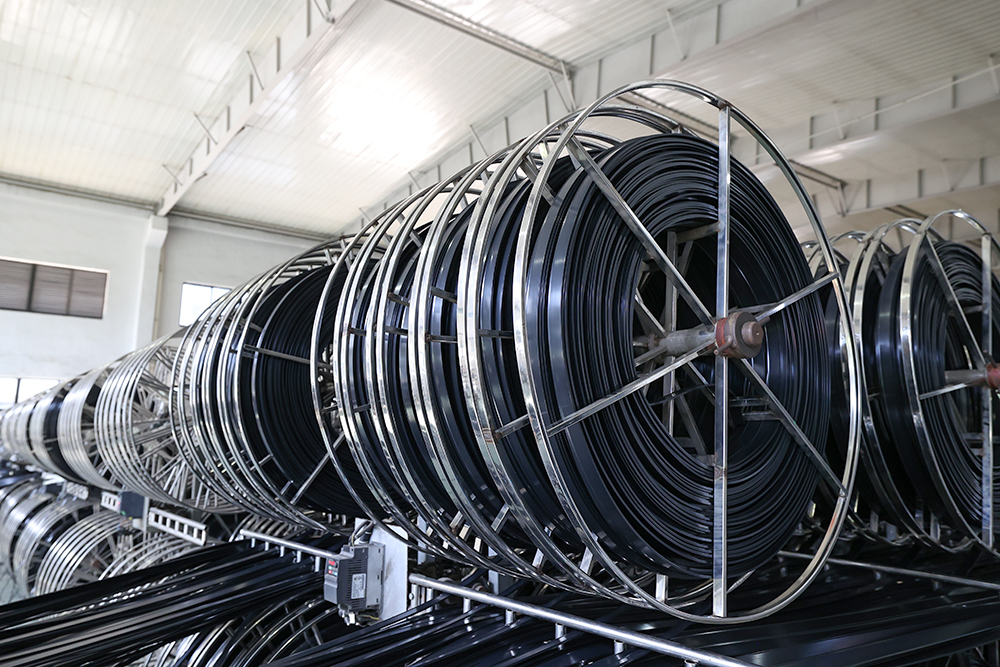
Advanced manufacturing facilities for PA66 thermal break strips at Huzhou Bergman Advanced Materials.
A controlled production process helps ensure that each strip meets its intended dimensional and material requirements. From raw material preparation to finished product inspection, attention to manufacturing details is essential for maintaining consistent quality.
| Raw Material Preparation | → | Extrusion Conditions | → | Glass Fiber Distribution | → | Dimensional Control | → | Finished Product Inspection |
3How Polyamide Thermal Break Strips Improve Window and Door Performance
The benefits of polyamide thermal break strips extend beyond the insulating component itself. Their performance influences several important characteristics of the complete aluminum window and door system.
|
Improving Building Energy Efficiency By reducing heat transfer through aluminum frames, thermal break strips help limit unwanted heat exchange between indoor and outdoor environments. In winter, they help reduce heat loss through the frame, while in summer, they help limit external heat entering the building. This can reduce the heating and cooling demand associated with maintaining comfortable indoor temperatures. |
| Winter: Reduced Heat Loss Through the Frame | Summer: Limited External Heat Entering the Building |
|
Supporting Indoor Comfort A well-designed thermal break system helps improve the temperature distribution across window and door frames. By reducing the temperature difference between the interior frame surface and indoor air, it can also help lower the risk of surface condensation under suitable indoor humidity and ventilation conditions. |
|
Maintaining Structural Connections Thermal break strips must provide both insulation and a dependable mechanical connection. Properly designed polyamide strips work with aluminum profiles to maintain the integrity of the assembled frame. Their mechanical properties are particularly important when the finished windows and doors are exposed to wind loads, repeated operation, and environmental changes. |
|
Supporting Modern Architectural Designs Thermal break technology allows aluminum windows and doors to combine the strength and design flexibility of metal profiles with improved insulation performance. This makes polyamide thermal break strips an important component in residential buildings, commercial developments, and modern curtain wall systems. |
4What Determines the Quality of a Reliable Thermal Break Strip?
Not all thermal break strips deliver the same performance. Several factors should be considered when evaluating product quality.
| 1 | First, the raw material composition matters. PA66 reinforced with glass fiber is commonly selected for its combination of mechanical strength, stiffness, and thermal insulation properties. Consistent material quality helps reduce variations between production batches. |
| 2 | Second, dimensional accuracy must be carefully controlled. Differences in width, thickness, or cross-sectional geometry may affect compatibility with aluminum profile grooves. A properly manufactured strip should meet the required specifications for its intended profile system. |
| 3 | Third, mechanical properties deserve attention. Tensile strength, flexural behavior, and dimensional stability are important considerations because the strip must withstand processing and maintain a reliable connection after assembly. |
| 4 | Finally, quality inspection should cover more than visual appearance. Material testing, dimensional measurement, and relevant mechanical evaluations provide a clearer understanding of whether a product meets its technical requirements. |
Choosing thermal break strips based on verified specifications rather than appearance alone helps support more consistent production and finished product quality.
5Why Choose an Experienced Thermal Break Strip Manufacturer?
The quality of a thermal break strip is closely connected to the manufacturer's material knowledge, production capabilities, and quality management practices. An experienced manufacturer can provide more than standard products; it can also offer technical support and customized solutions for different aluminum profile systems.
|
Dec 2010
Established
|
Feb 2015
Listed on NEEQ
|
32,000 sq m
Area Covered
|
Established in December 2010, Huzhou Bergman Advanced Materials is a national high-tech enterprise and provincial-level science and technology enterprise integrating research and development, production, sales, and service. In February 2015, the company was successfully listed on China's National Equities Exchange and Quotations (NEEQ), also known as the New Third Board.
Covering an area of 32,000 square meters, Bergman focuses on high-performance polymer materials and develops products for multiple industrial applications. Its product portfolio includes insulation glue and thermal insulation strips for building aluminum profiles, sealants for the electronics and filtration industries, laminating adhesives for packaging, and composite adhesives for the textile industry.
With experience in polymer material development and manufacturing, Bergman provides thermal break strip solutions for aluminum window, door, and curtain wall applications. Different product dimensions and profile configurations can be considered according to project requirements, helping customers find suitable solutions for their specific aluminum systems.
The company combines research and development with manufacturing and sales, supporting product development and quality control throughout the production process.
Building Better Aluminum Systems Starts with the Right Thermal Break Strip
Thermal break strips may represent only a small part of an aluminum window or door, but their influence on insulation, structural stability, and overall system performance is significant. Polyamide thermal break strips, particularly glass-fiber-reinforced PA66 products, provide a practical combination of thermal insulation, mechanical strength, and dimensional stability. Selecting suitable materials and working with an experienced manufacturer are essential steps toward achieving consistent product quality and reliable thermal break systems.