


What Makes High-Quality Thermal Barrier Strips More Durable?
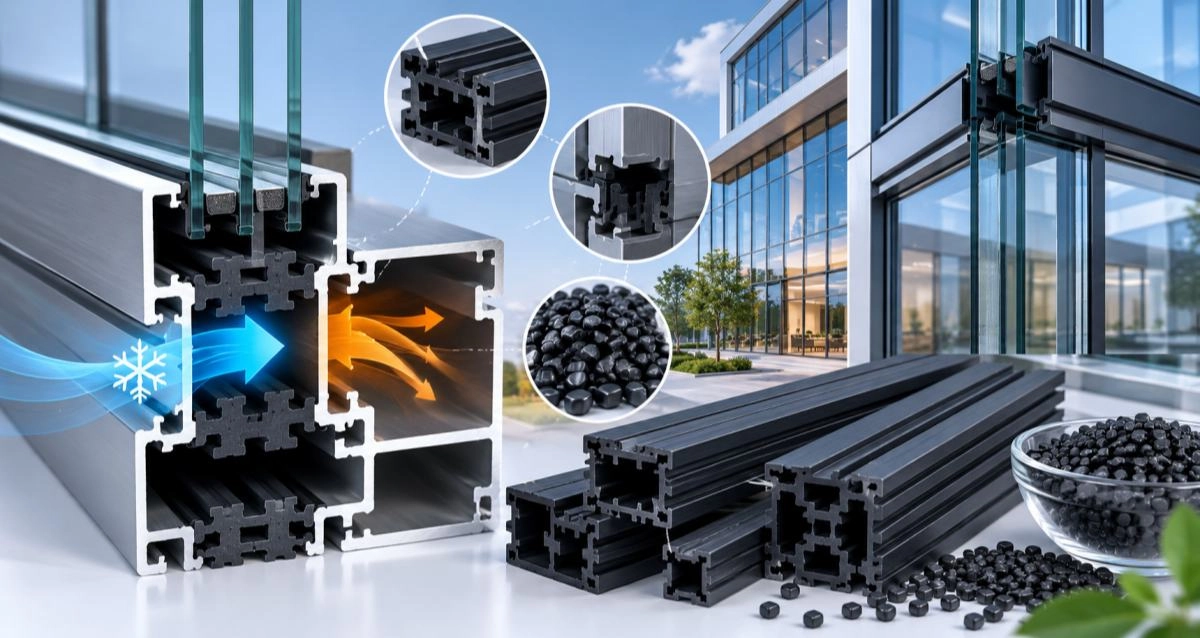
As energy-efficient building standards continue to evolve, Thermal Barrier Strips have become a critical component in modern aluminum windows, doors, and curtain wall systems. Their primary function is to interrupt heat transfer through aluminum profiles, reducing thermal bridging and improving overall building performance. However, not all Thermal Barrier Strips deliver the same level of durability. The long-term reliability of a thermal break system depends heavily on material quality, manufacturing precision, and structural performance.
Material Selection Is the Foundation of Durability
One of the most important factors influencing the lifespan of Thermal Barrier Strips is the raw material used in their production. High-quality strips are commonly manufactured from PA66 reinforced with 25% glass fiber (PA66 GF25) because this material offers an excellent balance of thermal insulation, mechanical strength, and dimensional stability. The addition of glass fiber significantly improves rigidity and load-bearing capability while maintaining low thermal conductivity.
Compared with ordinary plastics, reinforced polyamide performs much better under long-term exposure to temperature fluctuations, mechanical stress, and environmental conditions. This is why PA66 GF25 has become the preferred material for many high-performance Thermal Barrier Strips used in modern architectural systems.
Mechanical Strength Determines Long-Term Reliability
Although Thermal Barrier Strips are often viewed as insulation components, they also serve as structural connectors between interior and exterior aluminum profiles. As a result, mechanical properties are just as important as thermal performance.
High-quality Thermal Barrier Strips are designed to withstand:
- ›Wind pressure on curtain walls
- ›Daily operation of windows and doors
- ›Thermal expansion and contraction
- ›Long-term static loads from glazing systems
Products manufactured from glass-fiber reinforced PA66 exhibit high tensile strength and excellent resistance to deformation, helping maintain the integrity of the aluminum frame throughout its service life.
Key Factors Affecting Durability
| Factor | Contribution to Durability |
|---|---|
| PA66 GF25 Material | Improves strength and dimensional stability |
| Glass Fiber Reinforcement | Enhances stiffness and load-bearing capacity |
| Precision Extrusion | Ensures consistent fit within aluminum profiles |
| Thermal Stability | Reduces deformation caused by temperature changes |
| Moisture Resistance | Helps maintain performance in humid environments |
| Quality Control | Ensures consistent product performance between batches |
Resistance to Thermal Cycling
Buildings experience continuous temperature changes throughout the year. In many climates, aluminum profiles may be exposed to freezing temperatures in winter and intense heat in summer.
A durable Thermal Barrier Strip must maintain its shape and mechanical properties despite repeated expansion and contraction cycles. One advantage of reinforced polyamide is that its thermal expansion behavior is relatively compatible with aluminum. This reduces internal stress at the connection point between the strip and the metal profile, helping prevent cracking or separation over time.
For building owners, this translates into more stable thermal performance and fewer maintenance concerns during the life of the window or curtain wall system.
Manufacturing Precision Matters
Even the best material cannot compensate for poor manufacturing practices. High-quality Thermal Barrier Strips are produced using advanced extrusion processes that ensure accurate dimensions and uniform fiber distribution.
A precisely manufactured strip offers several advantages:
- ›Better engagement with aluminum profiles
- ›Improved structural stability
- ›Reduced installation issues
- ›More consistent thermal performance
In practical projects, installers often notice that well-manufactured strips fit smoothly into profile grooves and require fewer adjustments during assembly. This not only improves installation efficiency but also contributes to long-term reliability.
Durability in Real-World Applications
When selecting Thermal Barrier Strips, many buyers focus primarily on initial cost. However, long-term performance often proves to be the more important consideration.
Imagine two similar aluminum window systems. One uses a premium PA66 GF25 thermal break, while the other uses a lower-grade alternative. After several years of exposure to sunlight, humidity, and temperature cycling, the lower-quality strip may begin to deform or lose strength. This can lead to air leakage, reduced insulation performance, and increased maintenance costs.
By contrast, high-quality Thermal Barrier Strips help maintain structural stability and energy efficiency over the long term, making them a more cost-effective choice despite a potentially higher initial investment.
A Common Customer Question
Conclusion
The durability of Thermal Barrier Strips is influenced by a combination of factors, including material quality, mechanical strength, thermal stability, moisture resistance, and manufacturing precision. High-performance products manufactured from glass-fiber reinforced PA66 provide a reliable solution for modern aluminum window, door, and curtain wall systems.
For projects where energy efficiency, structural integrity, and long-term performance are priorities, choosing high-quality Thermal Barrier Strips is an investment that continues to deliver value throughout the life of the building. Their ability to resist environmental stress, maintain dimensional stability, and support the structural demands of modern façades makes them an essential component of high-performance building envelopes.