


Why Tensile Strength Matters in Thermal Barrier Strips
Thermal Break Strips are widely used in aluminum windows, doors, and curtain wall systems to reduce heat transfer between indoor and outdoor environments. While thermal insulation performance is often the first specification people consider, another property is equally important but sometimes overlooked: tensile strength.
A thermal break strip does much more than simply separate two aluminum profiles. It also acts as a structural connection between them. Without sufficient tensile strength, even a material with excellent thermal insulation properties may fail to deliver long-term performance. Understanding why tensile strength matters can help architects, fabricators, and building owners make better decisions when selecting Thermal Break Strips.
What Is Tensile Strength?
Tensile strength refers to a material's ability to resist forces that attempt to pull it apart. In the case of Thermal Break Strips, tensile strength determines how well the strip can maintain the connection between interior and exterior aluminum profiles under load.
FORCES DURING SERVICE LIFE
During the service life of a building, window and curtain wall systems are exposed to:
- →Wind pressure
- →Temperature fluctuations
- →Building movement
- →Glass weight
- →Repeated opening and closing of windows and doors
These forces create stress on the thermal break. A strip with insufficient tensile strength may deform, crack, or separate from the aluminum profile, compromising both structural integrity and thermal performance.
Why Thermal Break Strips Need Structural Strength
Many people assume Thermal Break Strips are simply insulation materials. In reality, they are also load-bearing components.
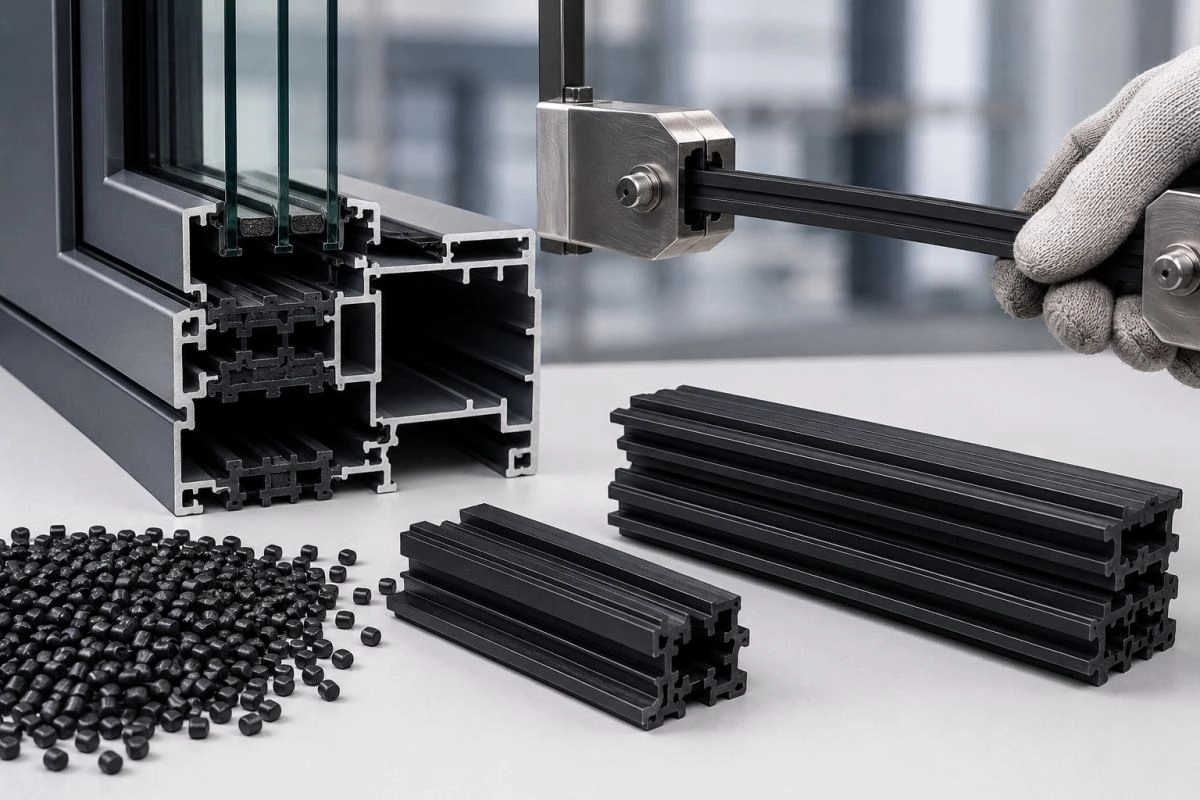
Modern aluminum systems often use polyamide strips reinforced with glass fiber. This combination provides low thermal conductivity while maintaining the mechanical strength required for structural applications.
Consider a large commercial curtain wall. The aluminum frame must support heavy glass panels while resisting strong wind loads. The Thermal Break Strip becomes a critical connection point within the frame structure. If the strip lacks adequate tensile strength, the entire system may experience alignment issues or reduced durability over time.
KEY BENEFITS OF HIGH TENSILE STRENGTH
The Relationship Between Tensile Strength and Durability
Durability is one of the most important factors in modern building design. A Thermal Break Strip may remain in service for decades, often exposed to changing weather conditions every day.
MATERIAL PERFORMANCE CHARACTERISTICS
Materials with high tensile strength typically exhibit:
- →Better resistance to fatigue
- →Lower risk of cracking
- →Improved dimensional stability
- →Greater resistance to long-term creep
For example, glass-fiber reinforced PA66 is commonly used because it combines excellent insulation properties with high mechanical performance. This allows the strip to withstand years of thermal cycling without significant degradation.
In contrast, lower-quality materials may initially appear acceptable but gradually lose strength, leading to maintenance issues and reduced energy efficiency.
How Tensile Strength Affects Thermal Performance
At first glance, tensile strength and thermal insulation seem unrelated. However, they are closely connected.
A Thermal Break Strip must maintain a precise separation between aluminum profiles. If the strip stretches, deforms, or cracks, the frame geometry can change. This may lead to:
- →Air leakage
- →Water infiltration
- →Reduced thermal efficiency
- →Increased condensation risk
Therefore, strong mechanical properties help preserve thermal performance throughout the product's lifecycle.
A PRACTICAL EXAMPLE
Imagine a residential building located in an area with hot summers and cold winters. The aluminum windows experience constant expansion and contraction as temperatures change.
If low-strength thermal breaks are used, small movements can gradually weaken the connection between profiles. Over several years, occupants may notice:
- →Drafts near windows
- →Increased energy bills
- →Difficulty opening or closing windows
- →Moisture around frame edges
By comparison, a high-strength Thermal Break Strip can maintain its shape and performance despite these repeated stresses, helping the system perform as intended.
Customer Q&A
Tensile Strength Is Not Optional—It Is Essential
When evaluating Thermal Break Strips, thermal conductivity should not be the only consideration. Tensile strength plays a vital role in maintaining structural stability, preserving thermal performance, and ensuring long-term durability.
A high-quality Thermal Break Strip must perform two functions simultaneously: reducing heat transfer and supporting the mechanical demands of the aluminum system. By choosing products with strong tensile properties, building professionals can improve reliability, extend service life, and maximize the overall performance of windows, doors, and curtain wall systems.
In modern energy-efficient construction, tensile strength is not simply a material specification—it is a key factor that helps Thermal Break Strips deliver lasting value throughout the life of the building.