


Thermal break strips have become essential components in modern aluminum window, door, and curtain wall systems. As buildings demand better energy efficiency and higher indoor comfort standards, traditional aluminum structures alone are no longer sufficient because aluminum naturally transfers heat very quickly. Without proper insulation, the frame itself becomes a pathway for energy loss.
Thermal break strips solve this issue by separating the interior and exterior aluminum sections with low-conductivity materials, significantly reducing thermal transfer. Although they are relatively small parts within a larger architectural system, their influence on building performance is substantial.
Understanding the Role of Thermal Break Strips
Aluminum is valued in construction because it is lightweight, corrosion-resistant, and structurally strong. However, its high thermal conductivity creates problems in both hot and cold climates. During summer, exterior heat can easily move indoors through the frame. In winter, indoor heat escapes outward just as quickly.
Thermal break strips interrupt this direct transfer of energy. Typically manufactured from reinforced polyamide materials, these strips create an insulating barrier between metal sections. Instead of allowing uninterrupted heat flow, the system slows thermal movement and improves the insulation capability of the entire window or facade assembly.
This change may seem simple from an engineering perspective, but the practical impact on energy use and occupant comfort is significant.
Improving Energy Efficiency in Buildings
One of the primary reasons thermal break strips are widely used today is their contribution to energy efficiency. Modern buildings consume large amounts of energy for heating and cooling, and windows are often among the weakest areas in the building envelope.
When aluminum frames lack thermal breaks, HVAC systems must work harder to compensate for constant heat gain or heat loss. This increases energy consumption and operating costs over time.
Thermal break technology helps reduce these inefficiencies by lowering the thermal conductivity of the frame system. As a result, indoor temperatures remain more stable, reducing dependence on air-conditioning and heating equipment.
In commercial buildings with extensive glass facades, the cumulative energy savings can be considerable over the life of the structure. Even in residential applications, homeowners often notice improved temperature stability and lower utility costs after upgrading to thermally broken systems.
Comparison of Thermal Performance
| Feature | Standard Aluminum Frame | Thermal Break Aluminum Frame |
| Heat Transfer | High | Significantly Reduced |
| Indoor Temperature Stability | Lower | Improved |
| Energy Efficiency | Moderate | High |
| HVAC Load | Higher | Lower |
| Surface Insulation | Weak | Stronger |
Enhancing Indoor Comfort
Energy efficiency is only part of the equation. Occupant comfort is equally important, especially in residential buildings, offices, hotels, and educational facilities.
Traditional aluminum frames often become extremely cold during winter months. People sitting near windows may feel cold drafts or discomfort caused by radiant heat loss, even when the indoor air temperature appears acceptable. In warmer climates, the opposite problem occurs, with frames becoming excessively hot due to solar exposure.
Thermal break strips help regulate surface temperatures by minimizing the direct transfer of outdoor conditions into the interior frame. This creates a more balanced indoor environment and improves comfort near windows and curtain walls.
The improvement is particularly noticeable in large glazing systems where extensive aluminum framing would otherwise amplify temperature fluctuations throughout the space.
Reducing Condensation Problems
Condensation is another major issue associated with non-thermally broken aluminum systems. When warm indoor air contacts cold metal surfaces, moisture forms on the frame. Over time, this can lead to water stains, mold growth, corrosion, and deterioration of surrounding materials.
Thermal break strips help maintain warmer interior surface temperatures during cold weather, reducing the likelihood of condensation forming. This not only protects the building structure but also improves indoor hygiene and air quality.
In humid climates or buildings with high interior moisture levels, such as hotels, kitchens, and office towers, condensation control becomes especially important for long-term durability.
Supporting Modern Building Standards
Building regulations around the world continue to place greater emphasis on sustainability and energy conservation. Architects and developers are increasingly expected to design structures that meet strict thermal performance standards.
Thermal break strips play a key role in helping aluminum systems comply with these requirements. Without thermal insulation barriers, many window and facade systems would struggle to satisfy modern efficiency targets.
This is particularly relevant for:
-
Green building certifications
-
Passive house construction
-
Low-energy commercial buildings
-
Sustainable residential developments
-
High-performance facade engineering
As regulations continue to evolve, thermally broken aluminum systems are becoming less of a premium option and more of an industry standard.
Maintaining Structural Advantages of Aluminum
One reason aluminum remains popular despite its thermal limitations is its excellent structural performance. It allows for slim profiles, large glass spans, and modern architectural aesthetics that would be difficult to achieve with heavier materials.
Thermal break strips allow designers to retain these structural benefits while improving insulation performance. Instead of replacing aluminum entirely, the technology enhances its suitability for energy-efficient construction.
This balance between strength and insulation is one of the key reasons thermal break systems are widely adopted in:
-
High-rise curtain walls
-
Sliding door systems
-
Modern residential architecture
-
Commercial facades
-
Large-span glazing projects
The combination of durability, aesthetics, and thermal efficiency makes these systems highly versatile across different building types.
Material Selection and Performance Stability
Most high-quality thermal break strips are manufactured from glass-fiber-reinforced polyamide, commonly known as PA66 GF25. This material offers a strong balance between mechanical strength and thermal insulation.
The material must withstand:
-
Continuous temperature fluctuations
-
Structural loads
-
Moisture exposure
-
UV exposure
-
Long-term aging
Because thermal break strips are integrated into structural aluminum systems, dimensional stability and durability are critical. Poor-quality materials may deform, weaken, or lose performance over time, affecting the overall reliability of the window or curtain wall system.
For this reason, manufacturers place strong emphasis on material formulation, extrusion precision, and quality control during production.
The Growing Importance of Thermal Break Technology
As urbanization increases and buildings become more energy-conscious, the role of thermal break technology continues to expand. Future developments are likely to focus on wider thermal barriers, improved composite materials, and enhanced sustainability performance.
Architectural trends toward larger glass surfaces also make thermal insulation more important than ever. Without thermal breaks, highly glazed buildings would experience substantial energy losses despite advances in glass technology.
Thermal break strips therefore represent more than a simple accessory inside aluminum systems. They are an essential engineering solution that allows modern architecture to balance aesthetics, structural performance, energy efficiency, and occupant comfort.
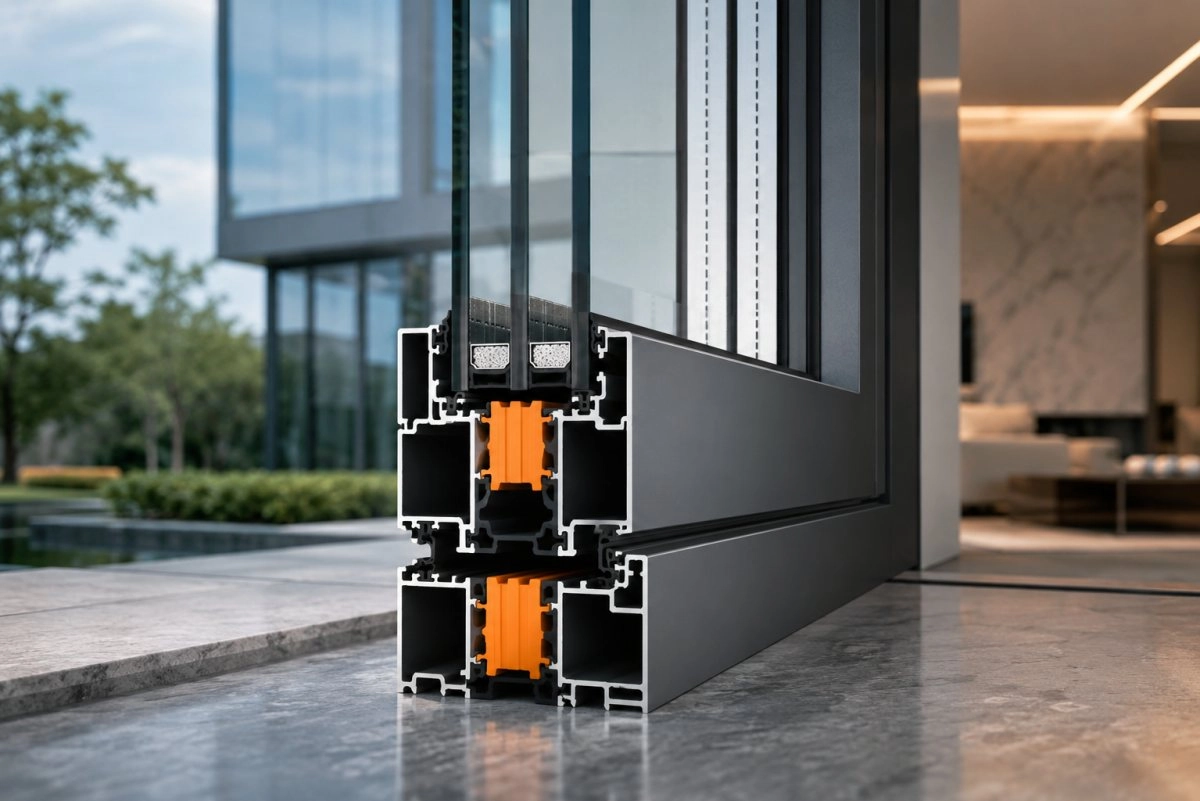
Thermal break strips are fundamental components in modern aluminum construction systems because they address one of aluminum’s greatest weaknesses: thermal conductivity. By interrupting heat transfer between interior and exterior metal sections, they improve insulation performance, reduce condensation, enhance comfort, and lower energy consumption.Their importance extends beyond simple efficiency improvements. Thermal break technology enables aluminum framing systems to meet modern architectural demands while supporting increasingly strict environmental standards.
As the construction industry continues moving toward sustainable and high-performance building design, thermal break strips will remain a critical part of efficient window, door, and facade engineering.